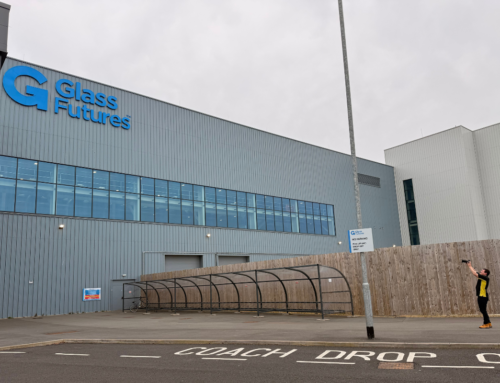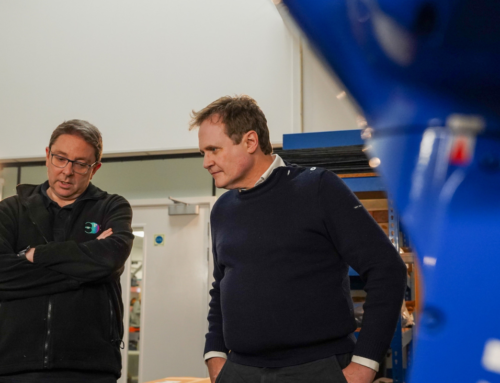
Following a full day of filming at Glass Futures and a very comfortable night at the impressive Crowne Plaza Sheffield, Sarah and Gary made the short journey to the University of Sheffield Advanced Manufacturing Research Centre (AMRC)’s castings facility. Here, they continued to capture the people, partnerships, and technologies behind the IRIFIO project. At the AMRC, the focus was specifically on metal casting inspection.
Their visit centred around a meeting with Jack Naylor, Ceramic Mould R&D Engineer. Jack provided an in-depth look at how advanced casting processes are evolving to meet the demands of modern manufacturing.
Exploring innovation in metal casting inspection
The AMRC Castings team plays a key role in developing and refining casting techniques for high-performance industries.
Casting remains a critical manufacturing process, particularly in sectors such as aerospace. Components that might traditionally be fabricated from multiple steel pieces can instead be produced as a single complex casting. Often, materials such as titanium are used. This approach reduces weight and improves structural integrity, but it also introduces significant technical challenges. Titanium, in particular, is notoriously difficult to work with. The casting process must be tightly controlled to ensure the final component is both strong and reliable. Even small inconsistencies can lead to defects, resulting in wasted material, lost time and increased energy consumption.
The challenge of traditional casting processes
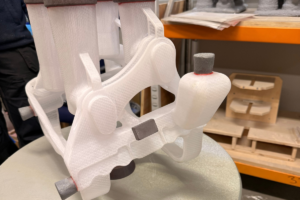
One of the most critical stages in casting is the creation of the ceramic mould. This involves building up multiple layers of material, with each layer requiring sufficient drying time before the next can be applied.
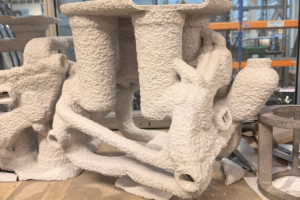
Traditionally, this process relies on fixed waiting periods. Operators allow each layer to dry for a prescribed period, often erring on the side of caution. While this approach reduces the risk of defects, it can also introduce inefficiencies, with unnecessary delays extending production times and increasing energy use.
A smarter approach to process control
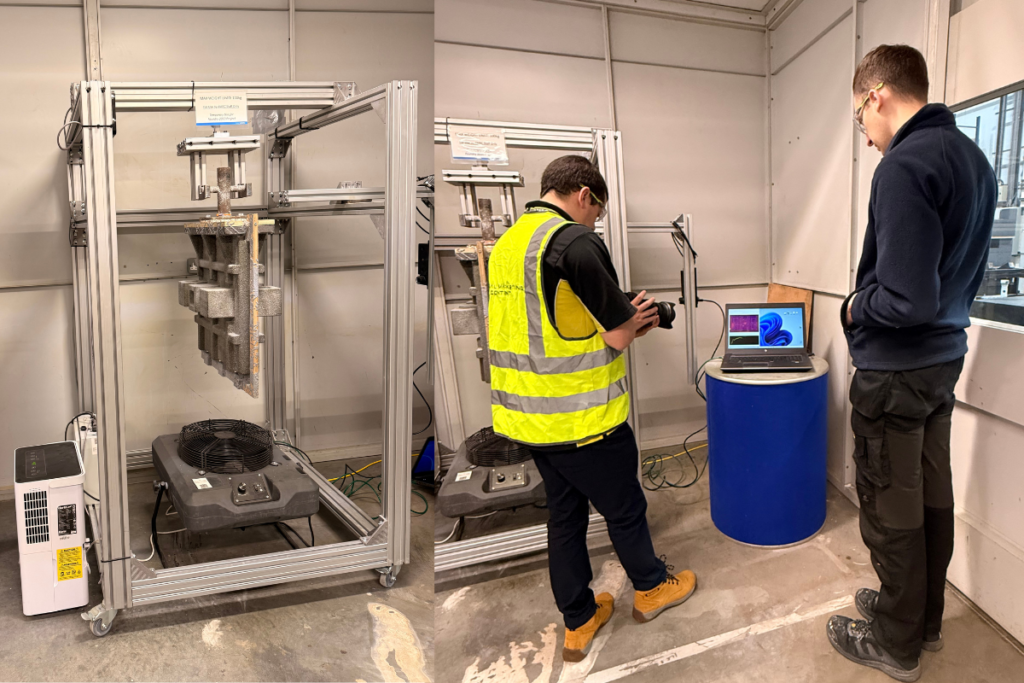
This is where the IRIFIO project begins to make a tangible difference. Using i3D’s thermal imaging technology, it becomes possible to monitor the drying process in real time. Rather than relying on estimated timings, engineers can clearly see when each layer has fully dried and is ready for the next stage. This shift from assumption to measurement has significant implications. It opens the door to reducing process times, improving consistency, and lowering the overall energy required to produce each component, all without compromising quality.
Insights from the visit
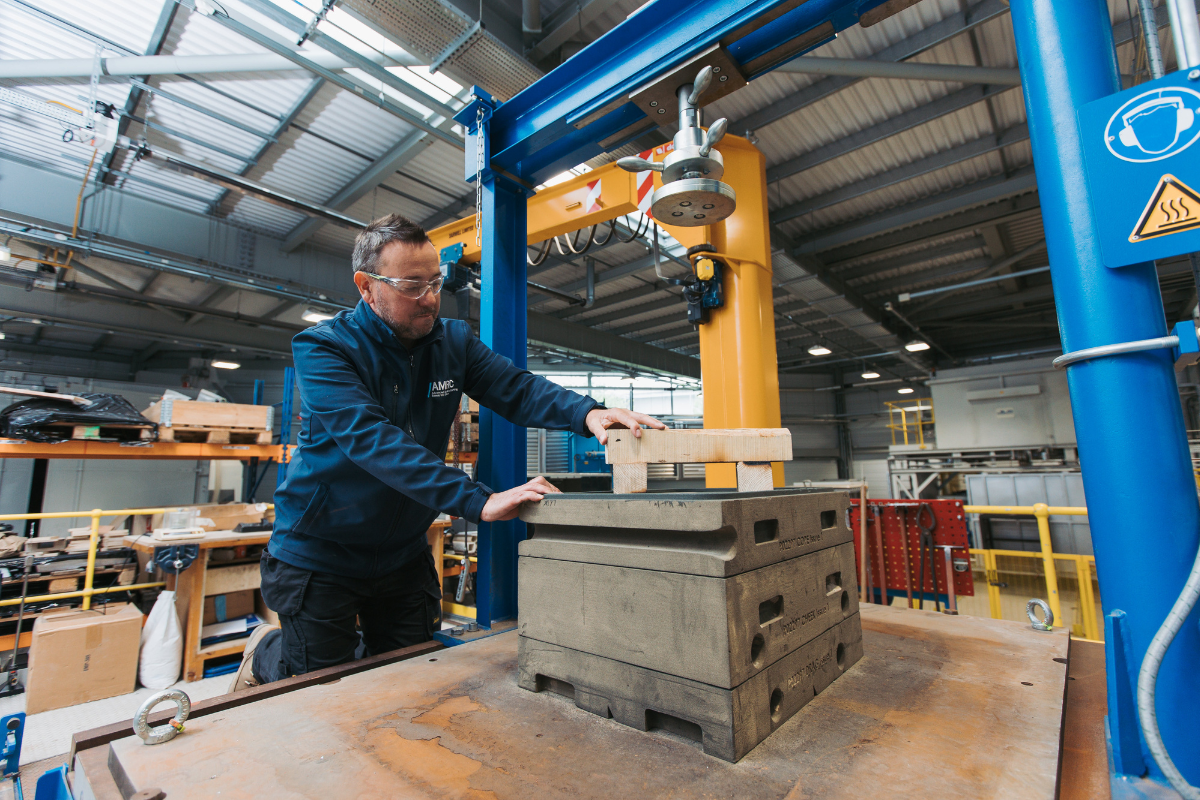
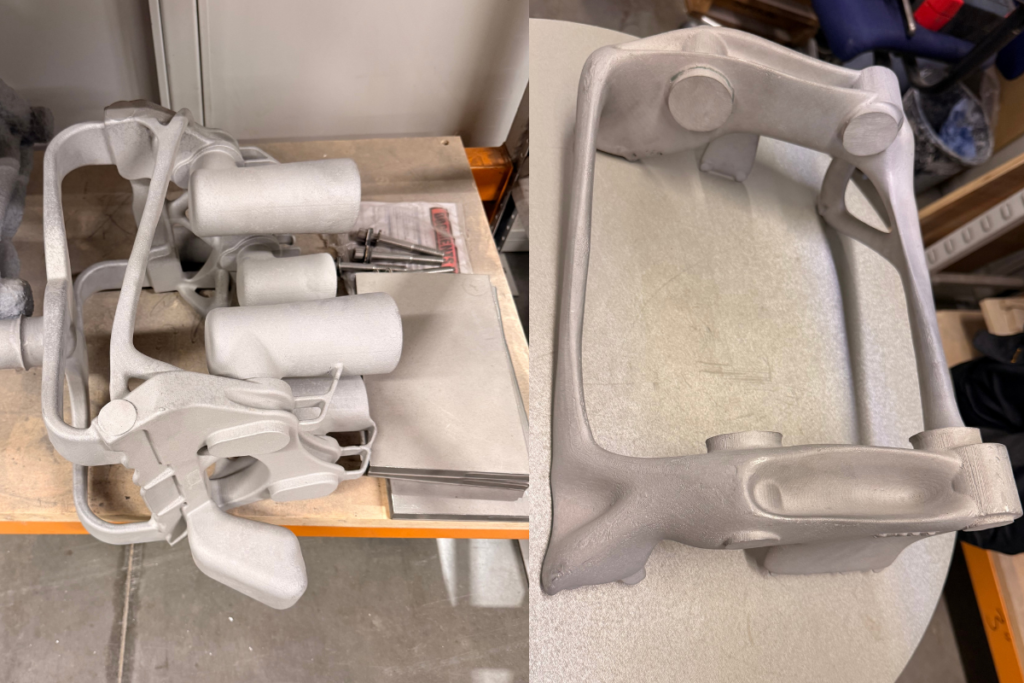
During the visit, Jack guided Sarah and Gary through the facility, explaining the different casting materials and processes in detail. From the composition of the cast slurries to the varying sizes of slurry bins and the equipment used to control drying and curing, every stage highlighted the complexity behind what might otherwise appear to be a straightforward process. Seeing the physical cast structures alongside finished components brought this to life. The contrast between raw and refined forms illustrated just how much precision is required at every stage.
Filming in this environment presented its own challenges. Unlike the more controlled setting at Glass Futures, the AMRC offered a busier, more industrial backdrop. This added to the authenticity of the footage, capturing the reality of manufacturing environments where these technologies are being applied.
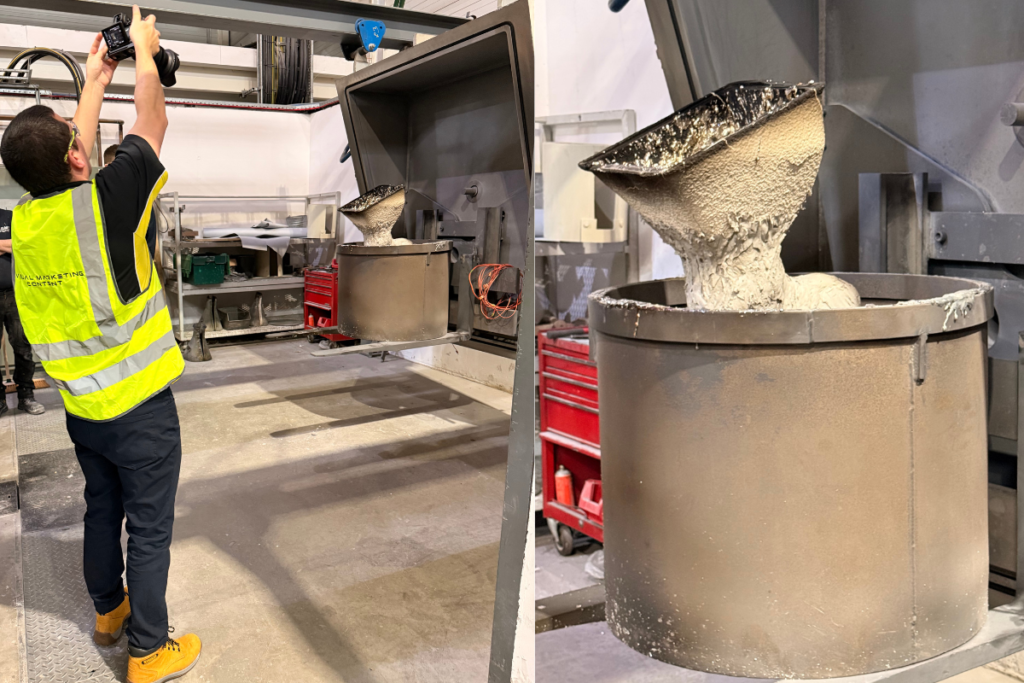
“Seeing these processes up close really reinforces how critical timing and precision are in casting. When you understand how much energy and material go into each component, it becomes clear that even small improvements in process control can have a significant impact on efficiency and sustainability.” ~ Sarah Marsh-Collings, Dissemination Officer at i3D
“From a filming perspective, it’s always about capturing the detail without losing the bigger picture. Environments like this bring that balance to life. You can see both the complexity of the process and the real-world impact of the technology.” ~ Gary Cooper, Create The Image
From innovation to real-world impact
The visit to the AMRC highlights the practical application of technologies developed through IRIFIO. It demonstrates how collaboration between research organisations, industry partners and technology specialists can lead to meaningful improvements in established manufacturing processes. While casting techniques have been refined over decades, the integration of real-time monitoring and advanced inspection is helping to push them further, improving efficiency, reducing waste, and supporting more sustainable production methods.
For i3D robotics, this is a clear example of how intelligent inspection and sensing technologies can deliver real value in complex industrial environments.
The videos from the AMRC and Glass Futures visits will be coming to our YouTube channel soon.