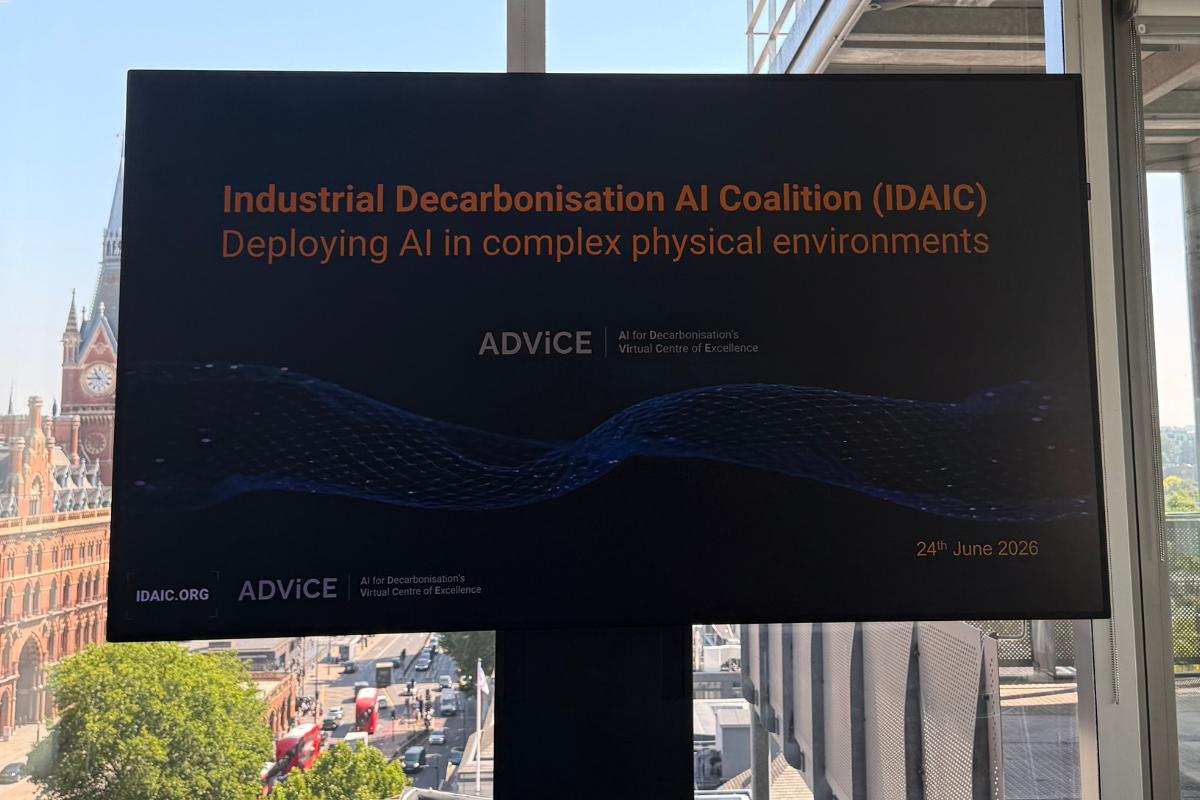
While London sweltered under record-breaking temperatures, inside Digital Catapult’s offices on Euston Road, another challenge was taking centre stage: how artificial intelligence (AI) can help in the decarbonisation of the UK’s most energy-intensive industries.
 The latest Industrial Decarbonisation AI Coalition (IDAIC) workshop brought together industrial companies, AI developers, researchers, investors and government-backed innovation organisations to explore some of the biggest questions facing industrial AI today. Where are intelligent technologies creating real value? How do we move successful demonstrations into operating conditions? And what support do innovators need to scale promising technologies into commercially viable solutions? All questions that innovators, including i3D robotics as a developer of AI-enabled machine vision solutions, have been working to address for several years. Events such as IDAIC meetings provide an opportunity to share experiences, challenge assumptions, and help shape the wider conversation on adopting AI to advance industrial decarbonisation.
The Conversation Around AI Has Changed
Not so long ago, discussions centred around whether AI could solve industrial problems. Instead, yesterday’s workshop focused on the practicalities of successfully deploying AI-enabled systems in operational environments.
Unlike office-based applications, industrial environments introduce a different set of complexities. Reliable deployment depends on more than powerful algorithms. It also requires high-quality data and interoperability with existing systems. Equally important, it must integrate with ageing infrastructure and complex operational processes.
Trusted Data Underpins Successful AI
One theme surfaced repeatedly throughout the day: AI technologies are only as effective as the data that underpins them. Discussions explored the importance of high-quality, reliable industrial data. Importantly, the practical barriers that continue to slow AI adoption were front and centre. Significant challenges remain around data sharing and data security. Consequently, successful deployment depends on much more than sophisticated algorithms alone.
These are precisely the kinds of problems that organisations developing industrial AI technologies must solve if they are to deliver meaningful improvements in productivity, efficiency and decarbonisation.
Collaboration Will Be Critical
Led by Innovate UK Business Connect, Nexus Climate and Cleantech For UK, the Industrial Decarbonisation AI Coalition exists to accelerate the adoption of AI across the UK’s foundation industries. The event also highlighted the work of ADViCE (Artificial Intelligence for Decarbonisation’s Virtual Centre of Excellence), led by Digital Catapult in partnership with the Energy Systems Catapult and The Alan Turing Institute. ADViCE aims to accelerate the development and deployment of AI technologies that support the UK’s transition to Net Zero.
Despite severe travel disruption caused by the extreme weather, around 45 delegates still attended in person, underscoring the growing importance of industrial AI in the UK’s decarbonisation agenda. The diversity of organisations represented in the room reflected that ambition. Alongside technology developers were manufacturers, universities, research institutes, investors, SMEs and public-sector organisations, all sharing their experiences and challenges in deploying AI in demanding industrial settings.
Moving Beyond Proof of Concept
The morning began with a welcome and introductions, followed by an overview of studies on AI adoption within Advanced Manufacturing and Transport. Subsequently, several case studies demonstrated that developing AI technology is only part of the challenge. Presentations from organisations including AIConstruct, Global Footprinting System and Anteam AI emphasised the importance of working closely with industry partners to validate solutions in live operating conditions. These demonstrated that successful deployment depends on understanding how technology performs in the complexities of industrial deployment, rather than under ideal laboratory conditions. A reality that aligns with i3D robotics’ experience in developing machine vision and AI-enabled inspection systems: technologies must operate reliably in challenging environments and deliver meaningful operational value rather than merely demonstrate technical capability.
There was also a discussion about the next stage of funding for AI innovation. Although still under development, Government and innovation partners are exploring new mechanisms to help promising technologies progress beyond successful proof-of-concept projects towards commercial deployment and industrial adoption.
Learning Through Collaboration
The afternoon workshops, led by the Alan Turing Institute, encouraged delegates to contribute directly to ADViCE’s growing knowledge base. This allowed innovators to share the practical barriers they’ve identified to adopting AI for industrial decarbonisation. In addition to the technology, discussions explored broader barriers to adoption, including skills, data access, interoperability, intellectual property, and organisational readiness.
Although delegates represented a diverse range of industries, organisations and disciplines, many described remarkably similar barriers to AI adoption. Concerns about data sharing, organisational readiness, skills, trust, and interoperability were common across sectors, reinforcing the idea that accelerating industrial decarbonisation will require collaboration as much as technological innovation.
Innovation Support In Action
Following the morning presentations, delegates toured Digital Catapult’s Future Networks Lab, where emerging technologies are being developed and tested to help accelerate innovation across UK industry.
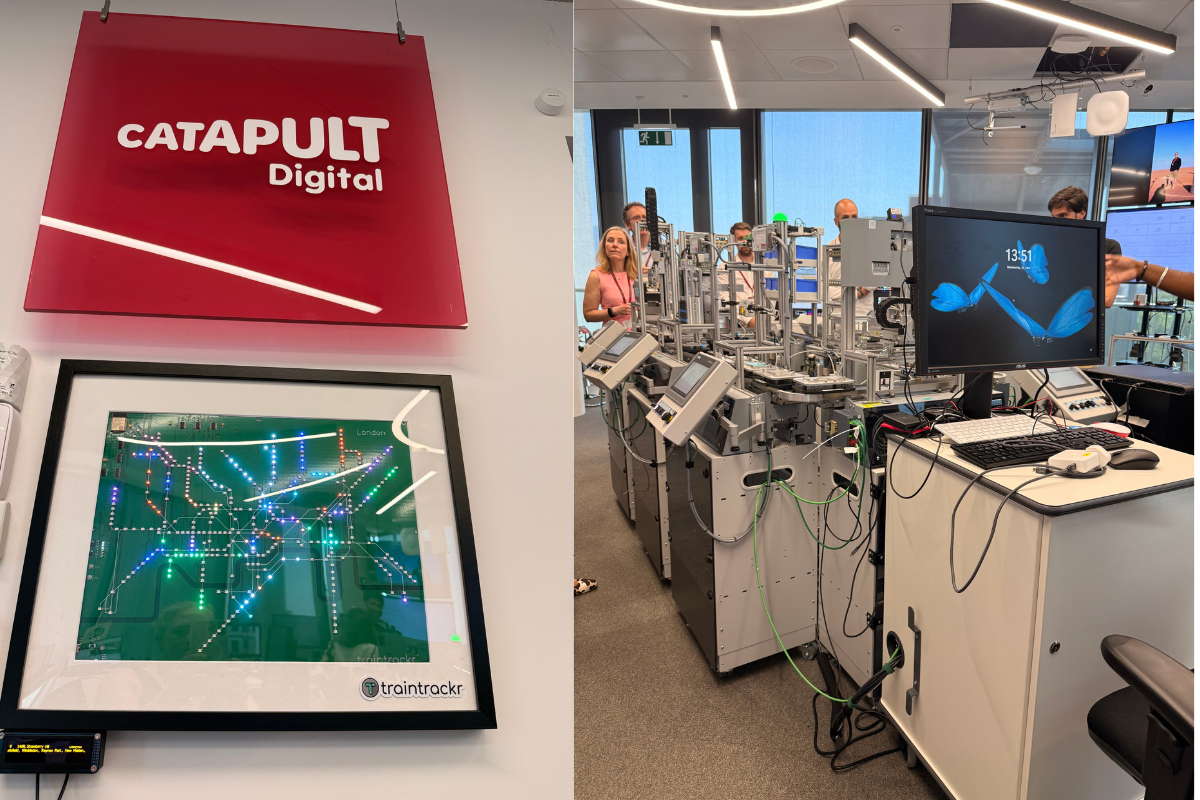
The visit provided a tangible reminder that successful AI deployment relies on much more than software alone. From advanced communications and connected systems to autonomous robotics, facilities such as these help bridge the gap between research, development and commercial deployment.
Delegates also met Marvin, one of the lab’s autonomous robots on loan from Extend Robotics, whose innovations have been supported through the Digital Catapult. When he’s settled in, he’ll be delivering tours of the facilities: a great example of AI and robotics being demonstrated in a real innovation environment.
Looking Ahead
For i3D, events such as the IDAIC workshops provide valuable opportunities to engage with the organisations helping to shape the future of industrial AI. Conversations with representatives from organisations including Glass Futures, The Alan Turing Institute, Cranfield University, The University of Exeter and others reinforced the importance of collaboration in developing technologies capable of delivering genuine industrial impact. It also reinforced the need for organisations to embrace new ways of working if AI is to be adopted at the scale needed to support industrial decarbonisation.
If there was one conclusion from the day, it was that industrial AI has moved beyond the question of whether it works. The focus is now firmly on how to deploy it successfully, safely and at scale. Achieving that will require collaboration, trusted data, and a willingness across industries to embrace new ways of working, in addition to the core technologies. As industries continue their journey towards Net Zero, the organisations that embrace these will be best placed to unlock AI’s full potential.
Those conversations are already happening. Initiatives like IDAIC are helping to turn them into action.