
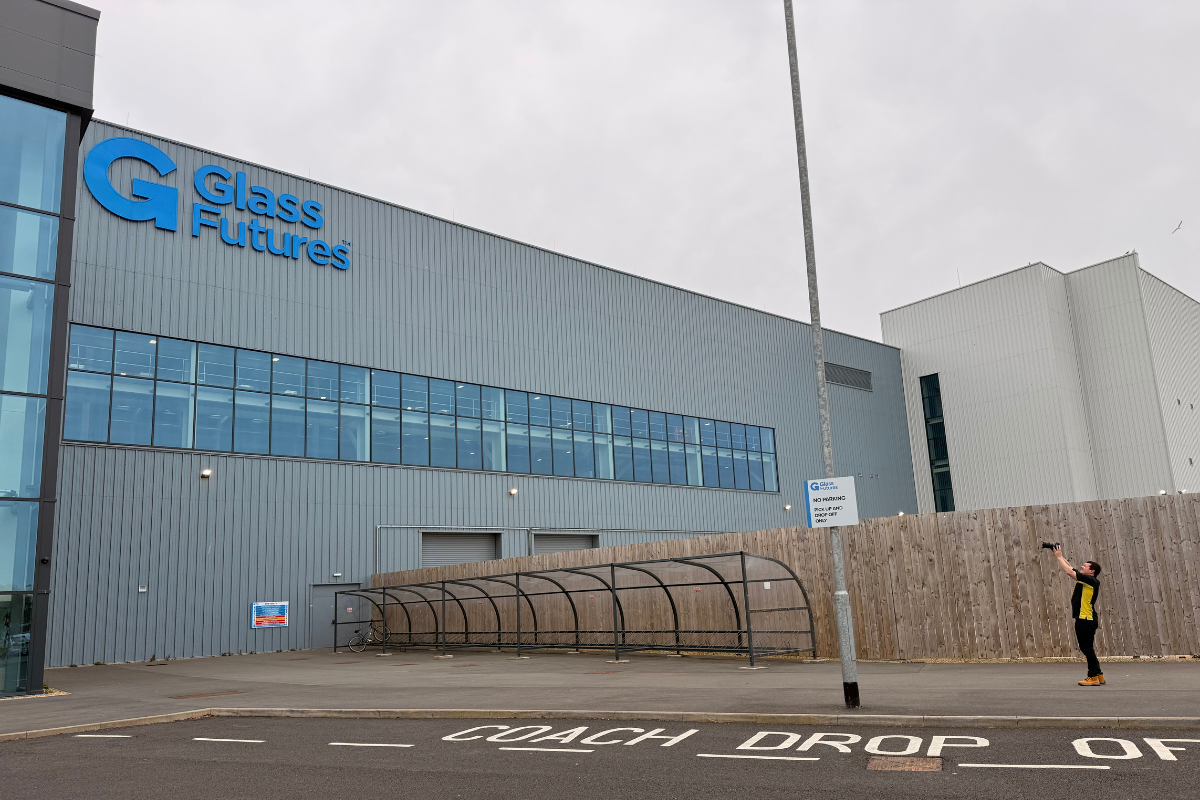
Capturing the people, partnerships and technology behind a major UK innovation project
March 2026 marked the conclusion of the ambitious IRIFIO (Intelligent Robotic Inspection for Foundation Industry Optimisation) project, a six-year innovation programme bringing together research organisations and industrial partners to tackle major challenges facing the UK’s foundation industries.
Like many long-term innovation projects, the journey was not without its challenges. The team navigated the COVID-19 disruption and adapted to the impact of the war in Ukraine, which affected access to planned industrial test materials. As a result, the consortium demonstrated the same resilience and adaptability that the project aims to bring to modern manufacturing.
The Project Brief
Funded by the Industrial Strategy Challenge Fund (ISCF) and led by i3D robotics, IRIFIO focused on applying advanced robotics, machine vision and sensor technologies to identify defects earlier in manufacturing processes.
The so-called foundation industries form the backbone of UK manufacturing. However, many of their core processes have remained largely unchanged for decades. Sectors including glass, ceramics, chemicals, paper and cement account for around 10% of the UK’s total CO₂ emissions, while also facing increasing pressure to meet ambitious net-zero targets. Improving efficiency is therefore a growing priority. By enabling earlier defect detection and reducing the need for destructive testing, IRIFIO technologies help manufacturers reduce waste, lower energy consumption, and improve production efficiency, supporting the transition toward more sustainable industrial processes.
The Video
With the project now complete, i3D wanted to capture both the technology developed and the collaboration behind it. To do this, Dissemination Officer Sarah joined forces with videographer Gary Cooper from Create The Image, visiting project partners to film the people, facilities and industrial environments where this innovation is being applied.
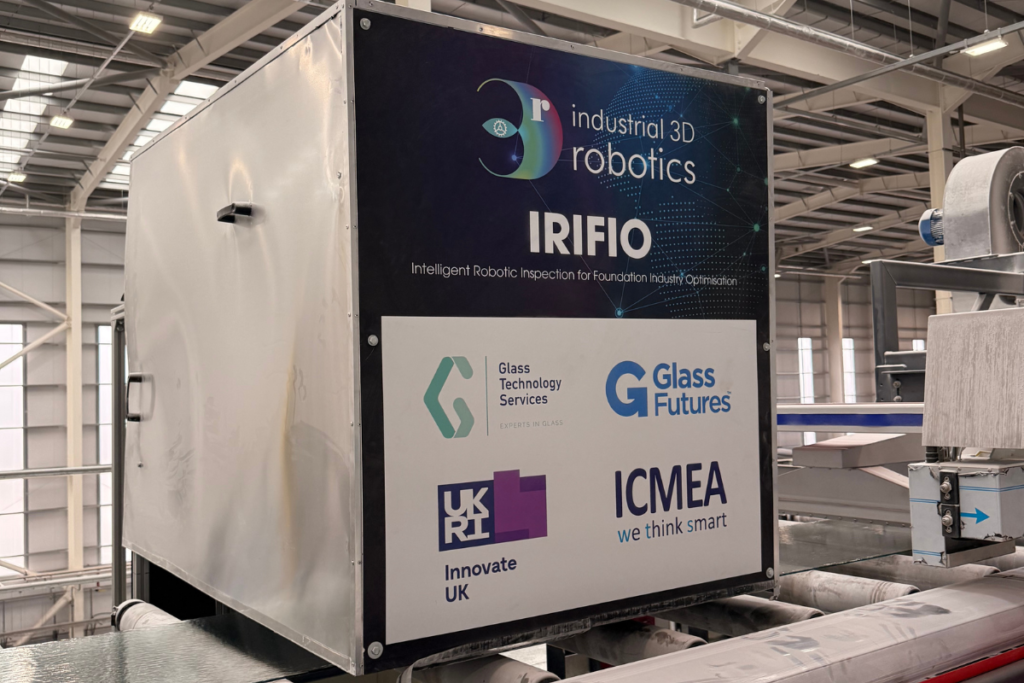
Their first stop was Glass Futures. Based at St Helen’s, this required a very early start – meeting in Dartford at 4 am before heading north to explore how advanced inspection technologies are supporting innovation in glass manufacturing.
On-site At Glass Futures
Glass Futures is a relatively new but already impressive research and innovation facility, focused on developing more sustainable glass manufacturing processes. The scale of the building makes an immediate impression, but what stands out most is the collaborative mission, bringing together industry, academia and technology partners to tackle some of the sector’s biggest challenges.
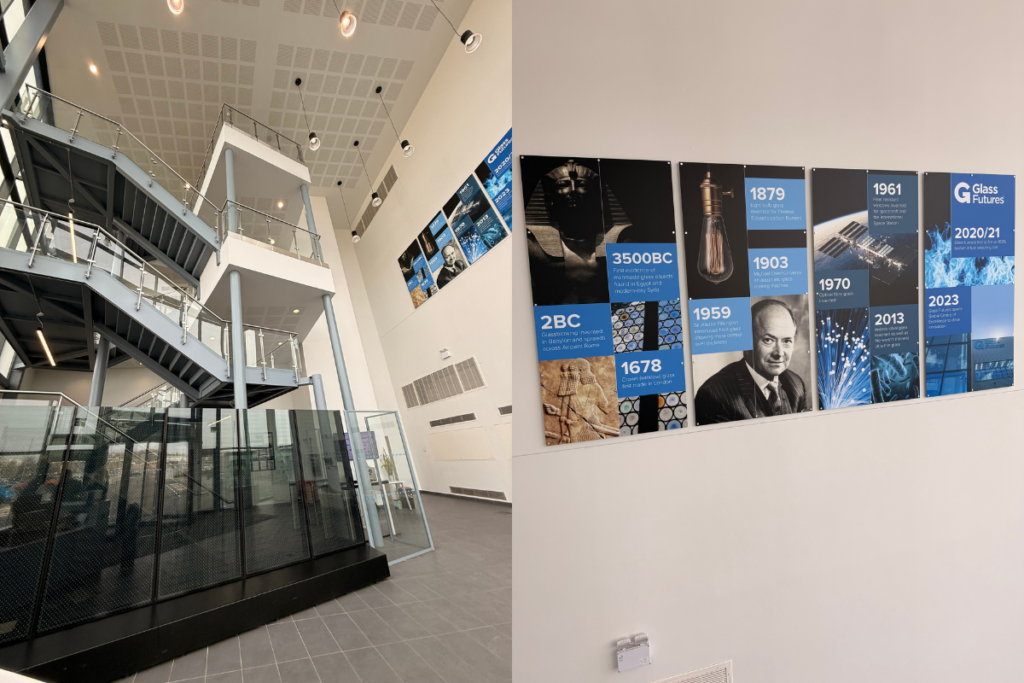
During the visit, they interviewed Dr Daniel Backhouse, Senior Glass Technologist at Glass Futures, who provided both technical insight and an engaging tour of the facility. The interview was filmed in two parts before moving onto the production line itself.
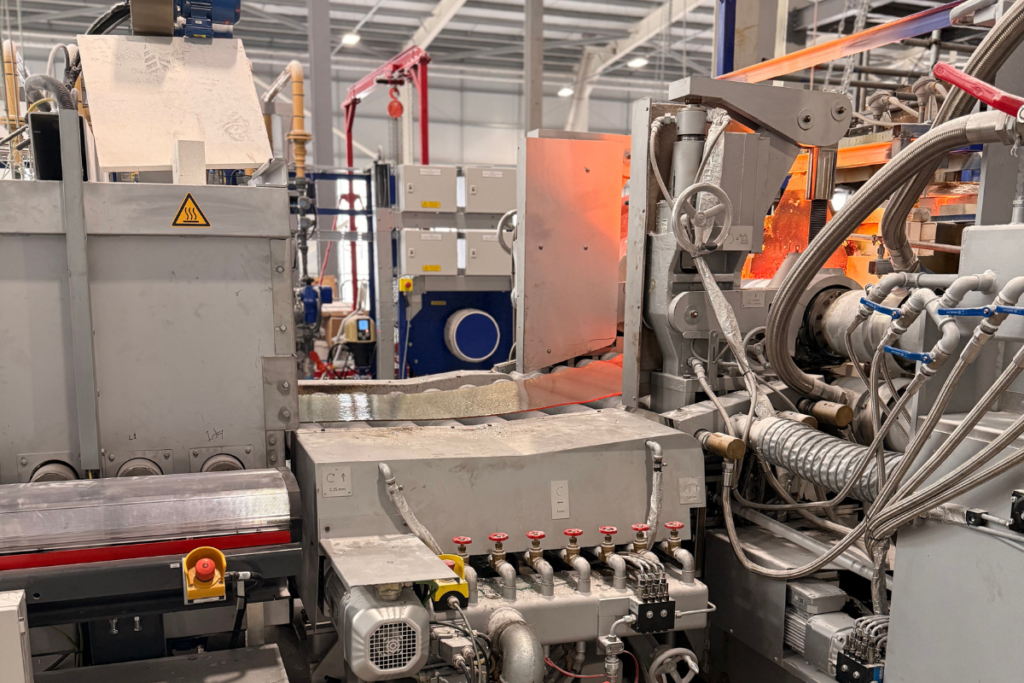
One highlight was seeing molten glass emerge from the furnace, gradually cooling and solidifying as it moved along the line. Daniel explained the importance of temperature consistency, where uneven heating or cooling can introduce stresses and defects that directly affect product quality.
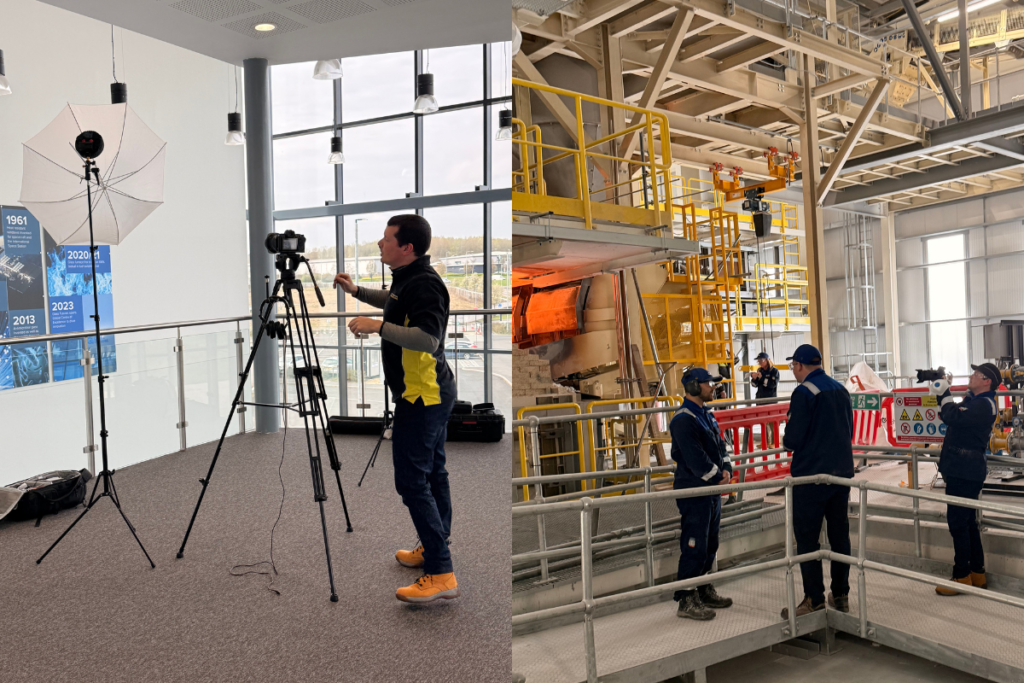
Meanwhile, behind the scenes, Gary worked methodically to capture every shot needed for the final video, directing positioning, refining angles and ensuring enough B-roll was gathered to tell the story effectively. As always, his calm and professional approach meant nothing was left to chance.
“Seeing the production process first-hand after years of writing about the IRIFIO technologies really highlighted the real-world impact of this work. When you see the scale of these industrial processes, you understand how even small improvements in early defect detection can translate into significant gains in efficiency, material savings and sustainability. A big thank you to Daniel and the team at Glass Futures for hosting us so generously.” ~ Sarah Marsh-Collings, Dissemination Officer at i3D
It’s a Wrap!
IRIFIO demonstrates what can be achieved when UK industry, research organisations and technology innovators work together. While the project has formally concluded, its impact continues with the technologies, partnerships and knowledge developed shaping how robotics and inspection systems support modern manufacturing. For i3D robotics, IRIFIO is a clear demonstration of what intelligent automation can achieve when innovation meets real industrial need.
Next: Sarah and Gary visit Jack Naylor at AMRC Castings to explore how IRIFIO technologies support defect detection in metal casting environments.