
Project Description
Adapting space imaging technology for industrial furnace inspection
Developed prior to the formation of i3D robotics, this project reflects the early stereo vision and industrial inspection capabilities that would later evolve into the company’s core technology focus.
IS-Instruments, in collaboration with the Mullard Space Science Laboratory (MSSL), developed an advanced high-temperature measurement system to monitor corrosion in metal-processing environments. The work explored how imaging technologies originally developed for planetary exploration could be adapted for industrial process applications. This project was supported through a flagship project awarded by the UK Space Agency.
The project focused on repurposing technology from the Mars Rover PanCam instrument to enable high-resolution 3D measurement within high-temperature furnace chambers.
Addressing corrosion challenges in high-temperature environments
Corrosion in metal-processing furnaces poses a significant operational challenge, often leading to unplanned maintenance, costly shutdowns, and reduced process efficiency. In extreme environments, corrosion can manifest as cracking, material loss, and wall thinning. Historically, all of these issues have compromised system integrity, sometimes with catastrophic results.
The developed measurement system was designed to support earlier detection of these effects through detailed 3D inspection and monitoring within operating furnace environments.
Advanced stereo imaging for industrial inspection
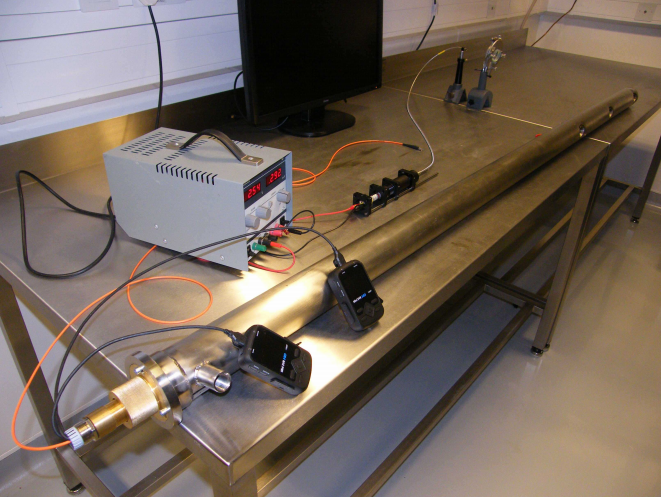
 The system combined a stereo camera arrangement mounted within a high-temperature periscope assembly with MSSL’s GOTHCHA stereo matching software. This enabled accurate, high-resolution 3D measurements to be generated from within furnace chambers operating at temperatures of up to 2000°C.
Using advanced stereo processing techniques, the technology provided dense spatial measurement coverage capable of identifying surface changes and degradation across challenging industrial environments.
Key Features
- Operation in environments up to 2000°C
- Approximate range accuracy of 1 mm
- High-resolution 3D surface measurement
- Dense spatial coverage
- Advanced stereo image processing
- Remote inspection capability for harsh environments
Supporting efficiency and emissions reduction
The technology was developed to enable earlier identification of corrosion-related degradation, thereby improving operational efficiency, reducing maintenance costs, and minimising downtime within metal processing facilities. Improved furnace monitoring can also help reduce emissions through more efficient process control and asset management.
Following manufacture of the instrument, the project generated significant industry interest and progressed towards planned trials at the Centre for Process Innovation (CPI), one of the UK’s Catapult centres for process engineering and manufacturing innovation.