The UK robotics sector stands at a pivotal moment. For years, industries viewed robotics and automation as futuristic concepts. The technology looked exciting in theory, but many businesses struggled to apply it in real-world environments. Today, that perception is changing rapidly.
techUK’s recently published report, Seizing the Robotics Opportunity, highlights the scale of the opportunity ahead for the UK. It also outlines how robotics technologies could drive productivity, sustainability, industrial resilience, and economic growth over the next decade. According to the report, widespread robotics adoption could add up to £150 billion in Gross Value Added (GVA) to the UK economy by 2035. In addition, robotics could help industries tackle labour shortages, improve efficiency, strengthen safety, and support decarbonisation goals. However, the report also highlights a major challenge for UK robotics. Although the UK leads the world in the quality of robotics research, many industries still struggle to deploy robotic technologies at scale. As a result, the UK continues to lag behind several international competitors in the adoption of industrial robotics.
That gap between innovation and implementation will shape the next chapter of the UK robotics story.
From Innovation to Industrial Deployment
One of the report’s strongest themes focuses on deployment. Robotics technologies no longer sit inside laboratories or isolated pilot projects. Instead, industries now use robotics systems across manufacturing, infrastructure, logistics, inspection, healthcare, energy, and transport. More importantly, businesses now deploy these technologies to solve practical industrial challenges in real operational environments. This shift matters because many industries still face repetitive, hazardous, and physically demanding processes. In some sectors, operators also struggle to monitor processes accurately with conventional methods. Robotics and machine vision technologies can help solve those problems.
At i3D robotics, we have seen these benefits first-hand. Intelligent machine vision and robotics technologies can improve safety, reduce waste, and increase process efficiency. In addition, our technologies support reliable inspection and consistent quality control across demanding industrial environments. Importantly, robotics does not replace human expertise. Instead, these technologies strengthen existing capabilities. They support better decision-making and help operators work more effectively in challenging conditions.
Collaboration Is Driving UK Robotics Forward
The techUK report also places strong emphasis on collaboration. Industry, academia, government, and technology providers must work together if the UK wants to successfully accelerate robotics adoption. This collaborative approach matters because modern industrial challenges rarely have simple solutions. In most cases, organisations need multiple technologies and specialist expertise to solve complex operational problems.
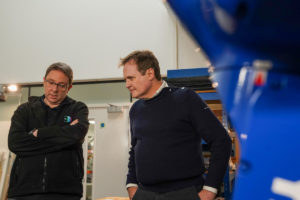
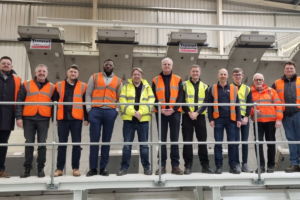
Showcasing robotics, AI, and stereo vision to Tom Tugendhat MP
Through projects and collaborations, including ATRIS and DATA-IS, IRIFIO, ENCIRC and IDEMA, as well as our involvement in the IDAIC coalition focused on sustainable industrial innovation, we continue to support the development of robotics and machine vision technologies that deliver measurable real-world impact. These projects support a wide range of industrial applications. For example, they include automated inspection, robotics deployment in challenging environments, advanced manufacturing, sustainability initiatives, and lower-carbon industrial processes.
The Evolution of M and E Tunnel Installation
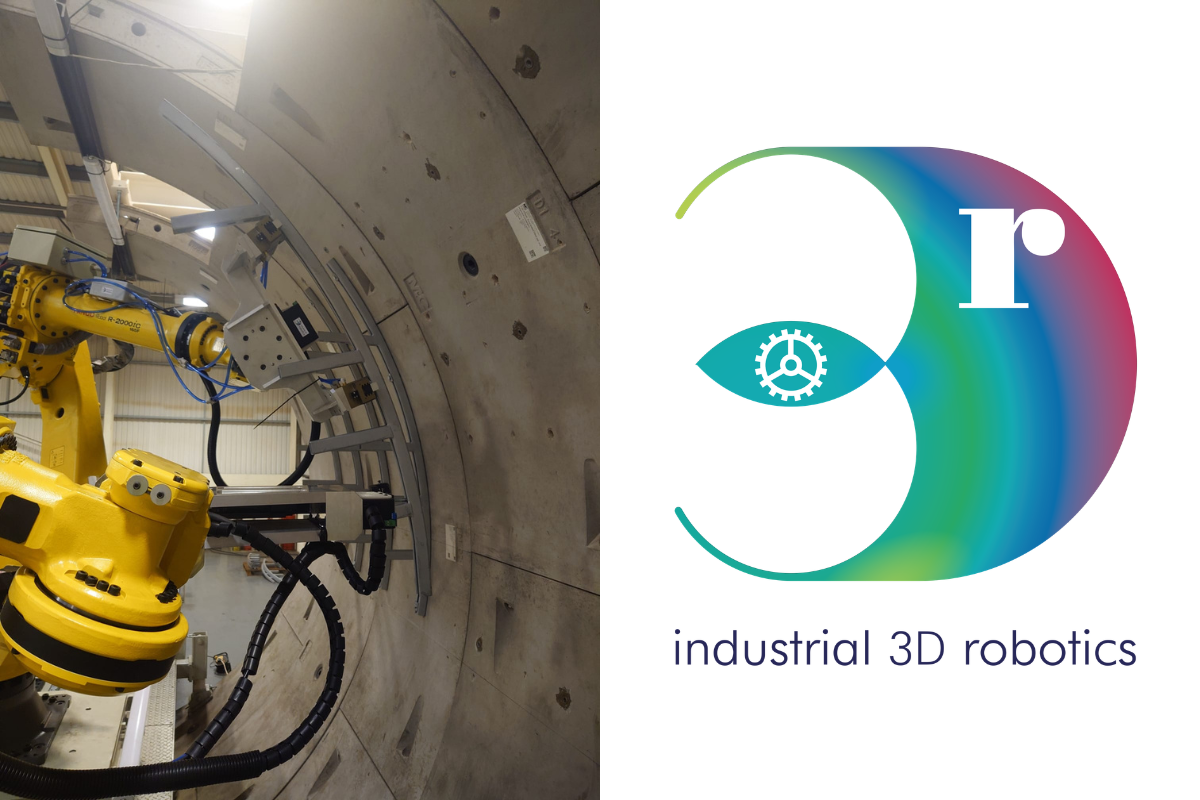
The ATRIS project explored robotic systems designed to support tunnel installation activities. The project demonstrated how robotics technologies can improve safety, precision, and efficiency in demanding infrastructure and construction environments. Similarly, IRIFIO and ENCIRC explored how intelligent inspection technologies can strengthen quality assurance, reduce material waste, and improve process understanding across foundation industries, including glass manufacturing and heavy industry.
Importantly, these projects represent far more than isolated demonstrations of technical capability. Instead, they form part of a wider industrial transition towards smarter, more connected, and data-driven manufacturing systems.
Robotics and Sustainability Go Hand in Hand
Sustainability now plays a major role in the growth of the UK robotics sector. As industries work to improve energy efficiency and reduce emissions, robotics technologies increasingly support those goals. For example, advanced inspection systems can identify defects earlier in the production process. As a result, manufacturers can reduce scrap, minimise rework, and improve resource efficiency. Likewise, robotics platforms can improve manufacturing consistency and optimise material usage. Intelligent monitoring systems can also support predictive maintenance strategies that reduce downtime and extend equipment life. This is one reason why initiatives such as IDAIC and IDEMA matter so much. These programmes recognise that innovation, sustainability, and industrial competitiveness are closely interconnected.
The future of robotics is not about automation for its own sake. It is about creating more efficient, resilient, and sustainable industrial systems.
UK Robotics – Building the Future
The UK already possesses many of the strengths needed to become a global leader in robotics. The country has world-class research institutions, highly innovative technology companies, strong engineering expertise, and growing cross-sector collaboration. Now, the challenge is clear. The UK must accelerate deployment and translate innovation into widespread industrial adoption.
To achieve that goal, industries must strengthen collaboration between technology developers and end users. In addition, the sector must create clearer pathways for scaling promising technologies. The UK must also continue investing in the ecosystems that help innovation move from concept to operational reality.
The robotics revolution no longer belongs in the future.
It is already happening.
Now, the opportunity for UK robotics lies in leading that transformation rather than simply responding to it.