The Construction Productivity Challenge
The UK’s construction industry is entering one of the most significant periods of change in its history.
With more than £700 billion of infrastructure projects planned over the coming decade, the sector faces growing pressure to deliver more, faster and more efficiently. At the same time, it must tackle longstanding productivity challenges, an ageing workforce, and a significant skills shortage. The Construction Industry Training Board estimates the industry will need an additional 41,200 workers every year, while around 400,000 people are expected to retire over the next five to ten years.
Against this backdrop, innovation is no longer simply about doing things differently. It is about finding new ways to help the industry deliver the projects the UK needs.
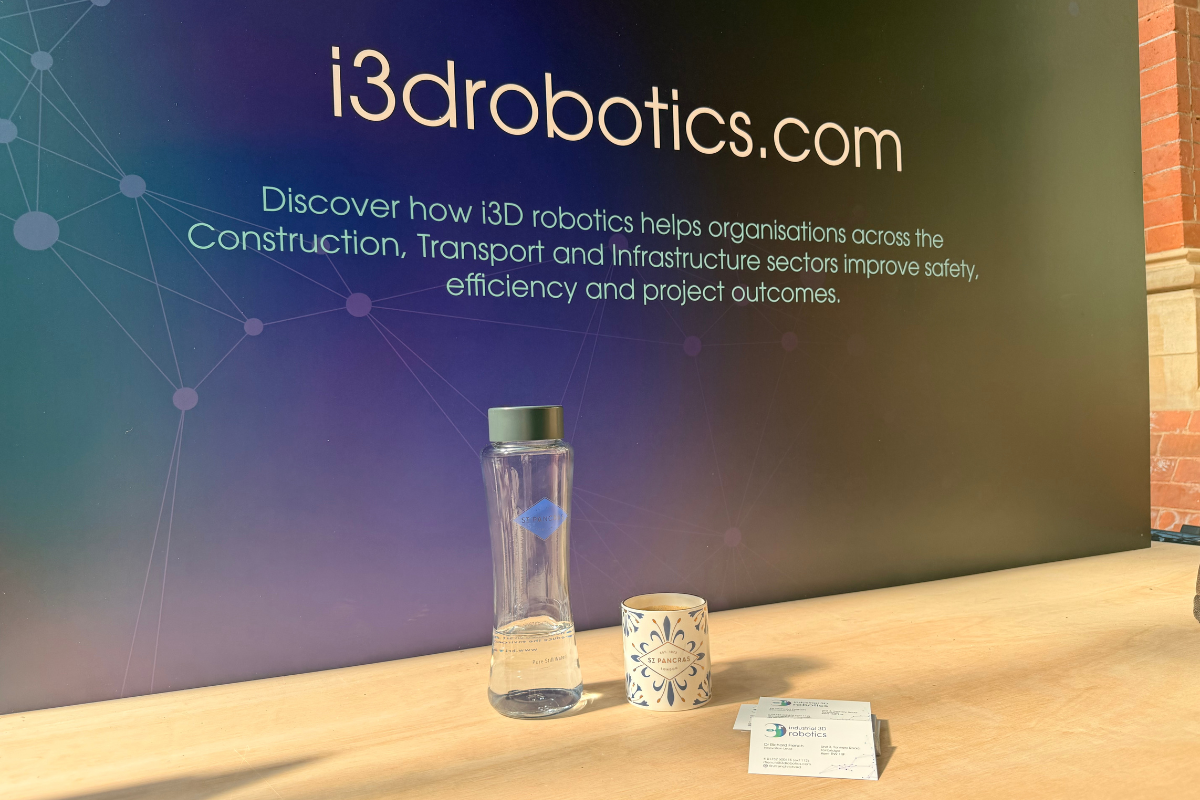
These were just some of the themes explored during MACE Construct’s exclusive Build Smart, Build Better event at St Pancras, where i3D robotics was delighted to join a select group of organisations showcasing technologies that could help shape the future of the built environment.
Bringing innovation together
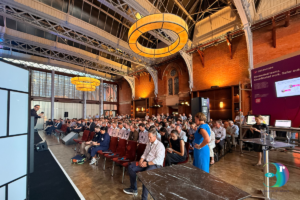 The evening brought together an impressive mix of organisations. Attendees and exhibitors included representatives from construction, engineering, AI, robotics, and digital technologies, as well as clients, contractors, academics, and policymakers. As exhibitors, we demonstrated several of our latest projects. Of particular interest were ATRIS, DATA-IS and RoFAB. These projects highlight how machine vision, artificial intelligence and digital twin technologies can improve inspection, quality assurance and autonomous robotic systems across the construction sector.
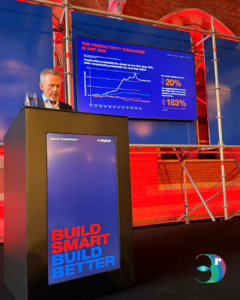
Alongside the exhibition, guests heard from Jason Millett, Group Chief Executive of MACE Construct, before a panel discussion explored the future of construction, productivity and the role of innovation in delivering the UK’s ambitious infrastructure programme.
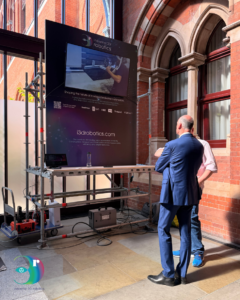
The event also provided an excellent opportunity to meet industry leaders, including Mark Reynolds CBE, Executive Chair of MACE Construct, representatives from Morrisroe, researchers from the University of Cambridge working on digital compliance systems, and Vishal Dhutia from Rolls-Royce SMR, where i3D robotics has recently joined the supplier network for weld inspection technologies.
Technology alone isn’t enough
One of the strongest messages to emerge throughout the evening was that improving productivity is about far more than adopting the latest technology.
 The report highlights several ways the industry can improve productivity. Better collaboration. Earlier contractor involvement. Digital coordination. Modern Methods of Construction. More consistent project delivery. Technology delivers the greatest value when projects embrace these ideas from the very beginning.
This is particularly relevant to robotics.
As our Innovation Lead, Dr Richard French, explains in the report, one of the biggest barriers to wider adoption isn’t the capability of the robots themselves, but the environments in which they are expected to operate.
“Construction sites were designed for people, not robots. Skilled tradespeople instinctively adapt to small variations in dimensions and materials. Robots cannot. They first need to detect those differences before they can compensate for them. That extra sensing and processing adds complexity and cost.”
Collaboration will drive the next generation of construction
Perhaps the most encouraging aspect of the evening wasn’t any single technology demonstration. It was seeing organisations from across the construction ecosystem coming together to share ideas, challenge assumptions and explore how collaboration can unlock productivity gains for the entire industry.
Whether through artificial intelligence, machine vision, robotics, digital twins or improved data management, innovation is no longer about isolated technologies. It is about creating connected systems that enable projects to be delivered more safely, more efficiently and with greater certainty.
With the UK’s infrastructure pipeline growing rapidly, those conversations have never been more important.
We’d like to thank MACE Construct for the invitation and for hosting such an insightful evening. We look forward to continuing the conversation-and playing our part in helping build a smarter industry to overcome the UK’s pressing construction productivity challenge.